Harbin Travel Guide
A Harbin guide to the ice and snow festival, the historic buildings of Central Street, Saint Sophia Cathedral and the city's northeastern and Russian food.
Harbin Travel guide
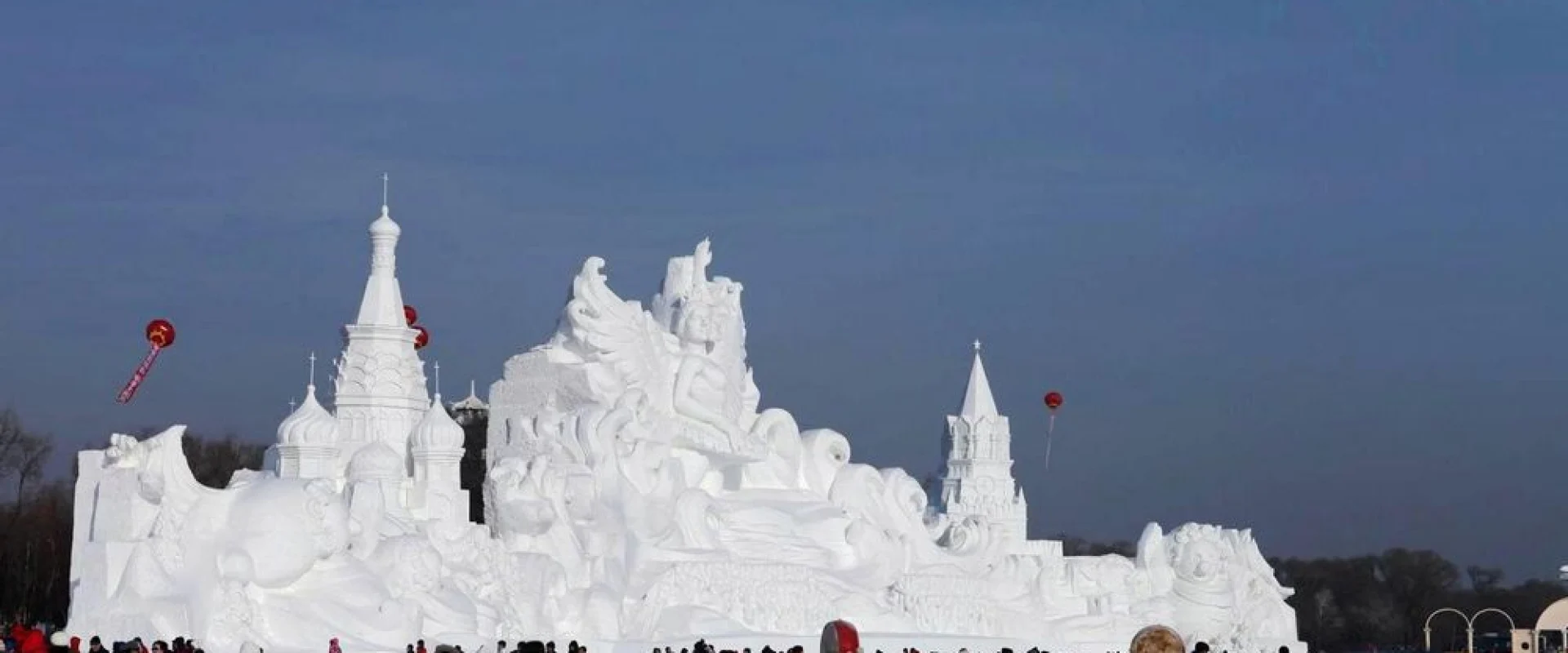
Harbin is the capital of Heilongjiang province in northeast China, and the country's northernmost major city. It grew from a railway hub built in the late 19th century, and since then its streets have been shaped by Russian and European influence. The winters are harsh, but the city turns them into a world-famous festival of snow and ice.Central Street is a cobbled pedestrian avenue lined with historic buildings in Baroque, Art Nouveau and other styles. Named a Chinese Historic and Cultural Street, it retains old hotels and shops, and at night the lamps light the cobbles. Rising in the city center, Saint Sophia Cathedral is a Byzantine-style church with a green onion dome, listed as a nationally protected cultural relic.The greatest winter draw is the ice and snow festival, built from ice blocks taken from the Songhua River. Palaces and slides of ice glow in many colors at night, creating a dreamlike scene. On Sun Island, snow sculptures stand in ranks, looking completely different by day and by night — the translucent blue of the ice world in daylight is a sight in itself.The food centers on hearty northeastern dishes built to endure the cold: guobaorou, sweet-and-sour pork, and pork stewed with vermicelli are local favorites. From its Russian heritage come borscht, dark bread and Harbin-style sausage. Taiping International Airport and Harbin West station link the city outward, and in winter people gather from across China for the ice festival.
Photos of Harbin
Harbin Essential information
Best time to visit
For the ice and snow festival, winter (December–February) is the main season, when the ice sculptures are at their most beautiful — though you must be ready for extreme cold. Summer (June–August) is cool and pleasant, ideal for relaxing on Sun Island. Spring and autumn are short, with abrupt temperature changes.
Weather and climate
An inland climate whose defining feature is severe winter cold. Temperatures fall to around 15 degrees below zero and sometimes lower. Summer is dry, staying in the high 20s, and makes a comfortable escape from the heat. Spring warms slowly, and even April can bring cold days.
Local food
Hearty northeastern dishes built to endure the cold lead Harbin's food. Guobaorou, sweet-and-sour pork; pork stewed with vermicelli; and stir-fried eggplant and potato are staples. Russian influence brings borscht and dark bread, and Harbin-style sausage is a popular souvenir.
Getting there and around
The airport is Harbin Taiping International Airport, served by flights from major Chinese cities and abroad. High-speed rail at Harbin West station runs to Beijing, Changchun and Shenyang. Metro and bus serve the city, reaching sights such as Central Street and Saint Sophia Cathedral.
Travel tips
Winter is extremely cold, so pack layers, a down coat, gloves, ear coverings and non-slip winter boots. Phone batteries drain fast in the cold, so bring a power bank and keep the device warm. The festival grounds look best after dark, so arrive before sunset.
Harbin Monthly climate
Typical monthly temperatures and rainfall based on historical climate records.
Jan
- Avg. high
- -13℃
- Avg. low
- -24℃
- Rainfall
- 4mm
Feb
- Avg. high
- -7℃
- Avg. low
- -20℃
- Rainfall
- 4.6mm
Mar
- Avg. high
- 2℃
- Avg. low
- -10℃
- Rainfall
- 11.2mm
Apr
- Avg. high
- 13℃
- Avg. low
- 1℃
- Rainfall
- 21.3mm
May
- Avg. high
- 21℃
- Avg. low
- 8℃
- Rainfall
- 37.3mm
Jun
- Avg. high
- 26℃
- Avg. low
- 15℃
- Rainfall
- 83mm
Jul
- Avg. high
- 28℃
- Avg. low
- 18℃
- Rainfall
- 153.8mm
Aug
- Avg. high
- 26℃
- Avg. low
- 16℃
- Rainfall
- 111.3mm
Sep
- Avg. high
- 21℃
- Avg. low
- 9℃
- Rainfall
- 61.9mm
Oct
- Avg. high
- 12℃
- Avg. low
- 1℃
- Rainfall
- 25.5mm
Nov
- Avg. high
- 0℃
- Avg. low
- -10℃
- Rainfall
- 9.4mm
Dec
- Avg. high
- -9℃
- Avg. low
- -20℃
- Rainfall
- 6mm
Historical climate averages for planning only. This is not a weather forecast.