Hohhot Travel Guide
A Hohhot guide to the Ming-dynasty Dazhao Temple, the Five Pagodas Temple, the Zhaojun Tomb and nomadic culture, plus lamb and dairy dishes.
Hohhot Travel guide
Hohhot is the capital of the Inner Mongolia Autonomous Region, its name meaning "blue city" in Mongolian. The center opens at the foot of the Daqing Mountains to the north, and the land has long been a meeting of farming and nomadic cultures. Its origins lie in a city wall built in the Ming dynasty, and today Mongols, Han, Hui and other peoples live here together.
In the old quarter, the Dazhao Temple is a Tibetan-Buddhist monastery built in the Ming dynasty, its grounds holding silver Buddhist statues, murals and carvings. Around it spreads a temple-front town of shops selling crafts and dairy products. Nearby stands the Five Pagodas Temple, and the Mongol-script astronomical chart carved on a pagoda wall is a valuable record of early astronomical knowledge.
South of the city lies the Zhaojun Tomb, said to be the tomb of Wang Zhaojun of the Han dynasty. Set within a broad garden, it is preserved as a site that recalls the exchange between the steppe peoples and the central plains. The city's museum introduces the natural grasslands and the life and costume of the Mongols.
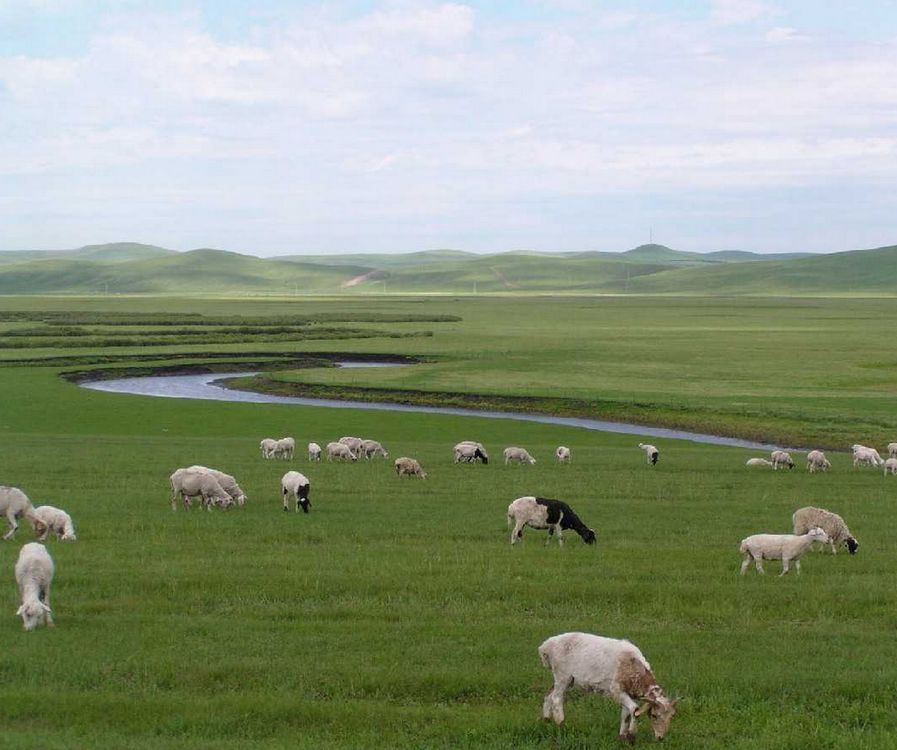
Dairy products and lamb lead Hohhot's food: boiled salted lamb eaten by hand, salty milk tea with roasted millet, and dried milk curd are all favorites. On the grasslands north of the city, Mongol festivals are held in summer, with riding and archery competitions.
Photos of Hohhot
Hohhot Essential information
Best time to visit
Summer (June–August) covers the grassland in green and is cool and comfortable, and Mongol festivals are held then. Autumn (September–October) brings clear air, suited to city and outskirts. Winter is very cold and dry. Spring is windy, with dusty days.
Weather and climate
A dry continental climate with large temperature swings. Winters are long and severe, with days below freezing. Summer days are hot but mornings and evenings are cool and pleasant. Spring is dry and windy, and autumn brings clear skies. The sun is strong, so a hat and sun protection help.
Local food
Dairy and lamb lead Hohhot's food. Boiled salted lamb, eaten from the bone by hand, is the Mongols' welcoming dish. Salty milk tea with roasted millet, dried milk curd, and grilled flatbread wrapped around lamb are everyday favorites.
Getting there and around
The airport is Hohhot Baita International Airport, linked to the city by metro and bus. Hohhot and Hohhot East stations are the rail hubs, with trains to Beijing and Baotou. Metro and bus serve the city. The outlying grassland is usually reached by arranging a car.
Travel tips
When heading to the grassland, bring a hat and a coat against the sun and wind. When visiting temples, be mindful of local customs and keep your visit quiet. Some restaurants make lamb dishes with milder flavors for those who find it strong. Temperatures differ between the center and the grassland, so layerable clothing is convenient.
Hohhot Monthly climate
Typical monthly temperatures and rainfall based on historical climate records.
Jan
- Avg. high
- -5℃
- Avg. low
- -17℃
- Rainfall
- 2.7mm
Feb
- Avg. high
- -1℃
- Avg. low
- -14℃
- Rainfall
- 5.5mm
Mar
- Avg. high
- 7℃
- Avg. low
- -6℃
- Rainfall
- 10.1mm
Apr
- Avg. high
- 16℃
- Avg. low
- 1℃
- Rainfall
- 16.5mm
May
- Avg. high
- 23℃
- Avg. low
- 8℃
- Rainfall
- 28.7mm
Jun
- Avg. high
- 27℃
- Avg. low
- 13℃
- Rainfall
- 48.6mm
Jul
- Avg. high
- 28℃
- Avg. low
- 16℃
- Rainfall
- 104.3mm
Aug
- Avg. high
- 26℃
- Avg. low
- 15℃
- Rainfall
- 115.2mm
Sep
- Avg. high
- 21℃
- Avg. low
- 8℃
- Rainfall
- 46.5mm
Oct
- Avg. high
- 14℃
- Avg. low
- 1℃
- Rainfall
- 22mm
Nov
- Avg. high
- 4℃
- Avg. low
- -7℃
- Rainfall
- 5.7mm
Dec
- Avg. high
- -4℃
- Avg. low
- -15℃
- Rainfall
- 2.4mm
Historical climate averages for planning only. This is not a weather forecast.