Nanjing Travel Guide
A Nanjing guide to the Ming Xiaoling Mausoleum, the Ming city wall and the lantern-lit Qinhuai River, plus the city's salted duck and duck dishes.
Nanjing Travel guide
Nanjing is the capital of Jiangsu province and one of China's great ancient capitals, spread along the lower Yangtze. Hills and lakes dot its surroundings, and tree-lined avenues run through the city. Several dynasties, beginning with the Six Dynasties, made their capital here, and the city gathers sights drawn from its long history.
The Ming Xiaoling Mausoleum, spread at the foot of Purple Mountain, is the tomb of the first Ming emperor. It is inscribed as a World Cultural Heritage site as part of the imperial tombs of the Ming and Qing dynasties. Midway up the same hillside stands a separate memorial complex; a flight of white stone steps climbs to its hall, from which you can look out over the city.
The Nanjing city wall, which once enclosed the city, was built in the Ming dynasty and is among the largest urban walls surviving in the world. At the Zhonghua Gate you can climb onto the wall and see the masonry skill of that era up close. As a city facing the Yangtze, the streets along its river and canals are also worth seeing.
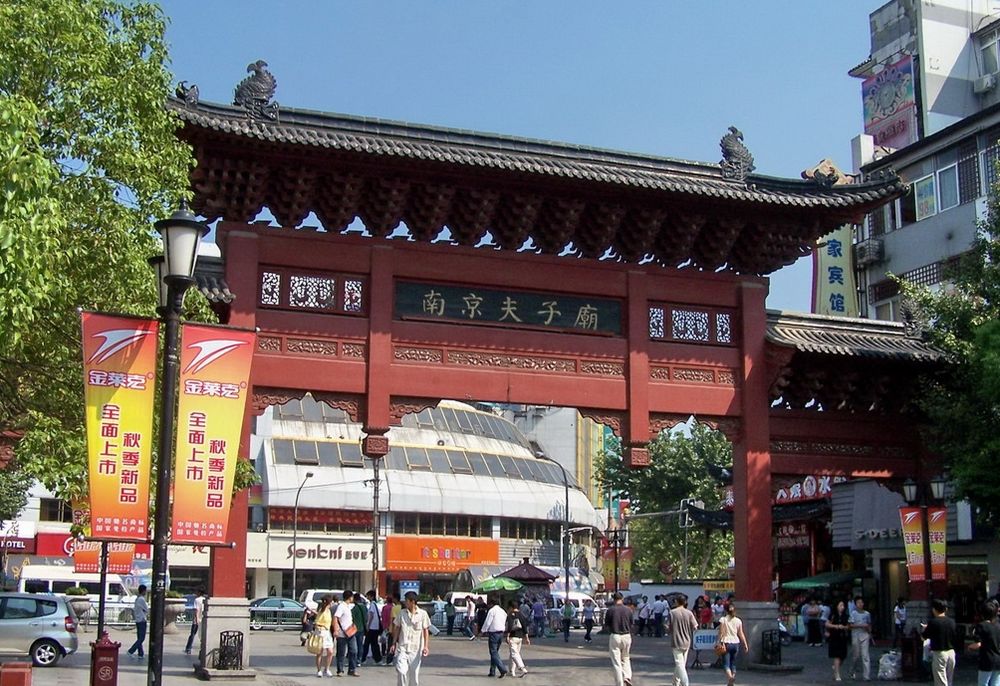
The area around the Confucius Temple and the Qinhuai River lights up at night, when lanterns reflect on the water and pleasure boats run. Duck dishes — salted duck and duck-blood vermicelli soup — are the tastes of Nanjing. High-speed rail links the city with Shanghai and Beijing, making it an ancient capital to enjoy for both its walks and its food.
Photos of Nanjing
Nanjing Essential information
Best time to visit
Spring (March–May) and autumn (September–November) are the most pleasant seasons. Spring brings hillside flowers and fresh greenery, and autumn, clear air and autumn colors. Summer is fiercely humid, and winter is cold with occasional snow. Holiday periods crowd the sights, so shifting your dates lets you see more in peace.
Weather and climate
A climate with clearly marked seasons, its standout feature being summer heat. Summers are muggy, and the rainy season brings wet spells. Spring is mild and flowery, and autumn has many clear, comfortable days. Winters are cold with rare snow. Pack rain gear and season-appropriate clothing.
Local food
Nanjing cuisine is a branch of Jiangsu cooking, known for its delicate, refined flavors. Salted duck, slowly cooked with salt and spices, is the city's signature dish. Duck-blood vermicelli soup, simmered in duck broth, is a popular light meal. Around the Confucius Temple, xiaolongbao, fried dumplings and sweet stews add to the variety.
Getting there and around
The airport is Nanjing Lukou International Airport, connected to the city by metro airport line and bus. High-speed rail at Nanjing South station is a hub, with direct trains to Shanghai and Beijing. A developed metro reaches the Confucius Temple, the mausoleums and other main sights.
Travel tips
The memorial hall on Purple Mountain involves many stone steps, so wear sturdy shoes. The walls and hills offer little shade, so in summer bring a hat and water. The Confucius Temple area lights up after dusk, and a riverside walk is a pleasure. Salted duck is also sold vacuum-packed, and many visitors buy it to take home.
Nanjing Monthly climate
Typical monthly temperatures and rainfall based on historical climate records.
Jan
- Avg. high
- 7℃
- Avg. low
- -1℃
- Rainfall
- 38.5mm
Feb
- Avg. high
- 9℃
- Avg. low
- 1℃
- Rainfall
- 49.4mm
Mar
- Avg. high
- 14℃
- Avg. low
- 5℃
- Rainfall
- 75.8mm
Apr
- Avg. high
- 20℃
- Avg. low
- 11℃
- Rainfall
- 85.5mm
May
- Avg. high
- 26℃
- Avg. low
- 16℃
- Rainfall
- 96.3mm
Jun
- Avg. high
- 29℃
- Avg. low
- 21℃
- Rainfall
- 168.5mm
Jul
- Avg. high
- 32℃
- Avg. low
- 25℃
- Rainfall
- 191.5mm
Aug
- Avg. high
- 32℃
- Avg. low
- 24℃
- Rainfall
- 128.7mm
Sep
- Avg. high
- 27℃
- Avg. low
- 19℃
- Rainfall
- 82.4mm
Oct
- Avg. high
- 22℃
- Avg. low
- 13℃
- Rainfall
- 53.9mm
Nov
- Avg. high
- 16℃
- Avg. low
- 7℃
- Rainfall
- 51.6mm
Dec
- Avg. high
- 10℃
- Avg. low
- 1℃
- Rainfall
- 28.5mm
Historical climate averages for planning only. This is not a weather forecast.