Yingtan Travel Guide
Yingtan, a town in northeastern Jiangxi, the entry to Mount Longhu, with the China Danxia World Natural Heritage and the riverside Taoist temples.
Yingtan Travel guide
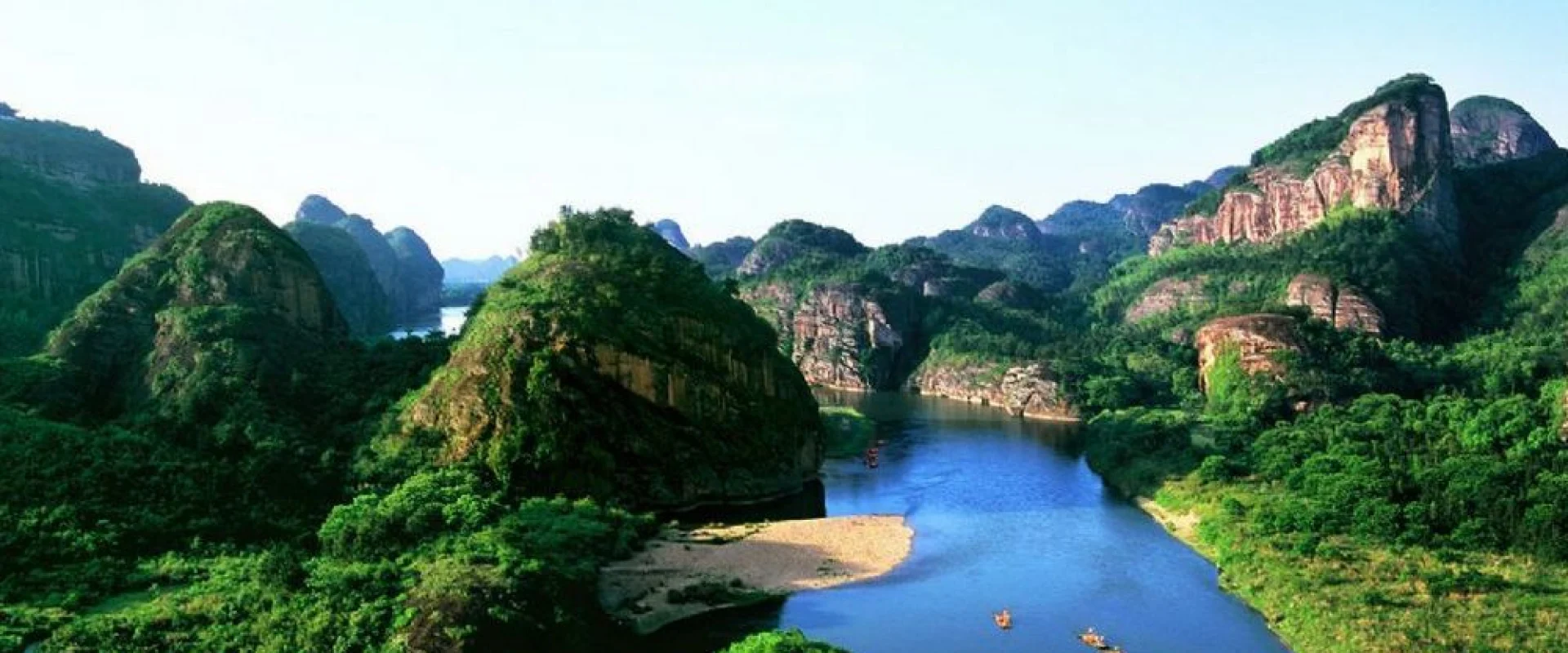
This town is located in the northeastern part of Jiangxi Province, on the banks of the Xinjiang River. In the southwestern section of the city, the Danxia landforms of Longhu Mountain stretch out, with reddish rock peaks lining the river. The interplay of the river, the rocks, and the verdant forests forms the very essence of this landscape. During periods of high water flow, the rock formations are reflected on the river's surface, making the reds and greens appear even more vivid.Longhu Mountain is a UNESCO World Natural Heritage site, part of China's Danxia landform system, characterized by towering cliffs and striking rock formations. Along the river at its base, you can take a small boat to cruise between the rocky pinnacles and get up close to ancient tomb sites carved into the cliff faces. After a rain, the red hues of the rocks become even richer and more pronounced.The mountain is considered the birthplace of one of Taoism's major sects, and along the riverbank, old Daoist temples and traditional villages still remain. In the town of Shangqing, stone-paved streets and time-honored buildings invite leisurely strolls. Simple, rustic dishes made with beans and river fish are cherished as local specialties.Today, the area is easily accessible via rail and road from Nanchang, the provincial capital, and neighboring cities, making it a convenient destination for day trips. This northeastern Jiangxi town offers a unique opportunity to experience both the rich history of Taoism and the breathtaking natural beauty of Danxia landforms.
Photos of Yingtan
Yingtan Essential information
Best time to visit
Spring and autumn are the best times to explore Danxia's rocky mountains and rivers. In summer, frequent rains raise river levels, sometimes making boat trips impossible. Autumn offers crisp, clear air, highlighting the striking contrast between red rock faces and greenery. Winter brings dry air and consistently good visibility.
Weather and climate
Located in the lowlands along the Xinjiang River, this area experiences lingering summer heat due to high humidity. From spring through early summer, fog is common, often shrouding the rocky mountains. Winters are dry, with prolonged cold spells. During the day, the sun shines brightly, and the reflection off the water can be intense.
Local food
Fish caught in the river and dishes made with beans are everyday flavors. Noodles and steamed foods crafted from rice flour, as well as stews served with mountain mushrooms, often grace the dining table. Locally beloved pickles spiced with chili and dried fish are also common. In the mornings, the sight of people sipping light noodle dishes has become an integral part of the town's scenery.
Getting there and around
Nanchang, the provincial capital, and surrounding cities are connected by rail and road. From the train station, you can reach the city center by car. To Longhu Mountain, take a car or a scheduled bus from the city center; the riverside route offers scenic views along its length. Boat tours are subject to weather conditions.
Travel tips
When cruising the river by boat, the glare reflecting off the water can be intense, so it's wise to bring a hat. After rain, the ground can become slippery, and the boardwalks may get crowded. On rocky areas, please stay on the designated paths. Before setting out, it's best to check the boat schedule to ensure a smooth experience.