Lhasa Travel Guide
A Lhasa guide to the World Heritage Potala Palace and Jokhang Temple, the Barkhor pilgrimage circuit, Sera Monastery's debates and Tibetan food.
Lhasa Travel guide
Lhasa is the capital of the Tibet Autonomous Region, a town on the plateau spreading north of the Himalayas. Sitting at an altitude of more than 3,000 meters, the sky feels close and the air is dry and clear. Since the Tibetan Empire that ruled this land placed its capital here in the seventh century, it has layered up more than a thousand years of history as a holy place of Tibetan Buddhism.
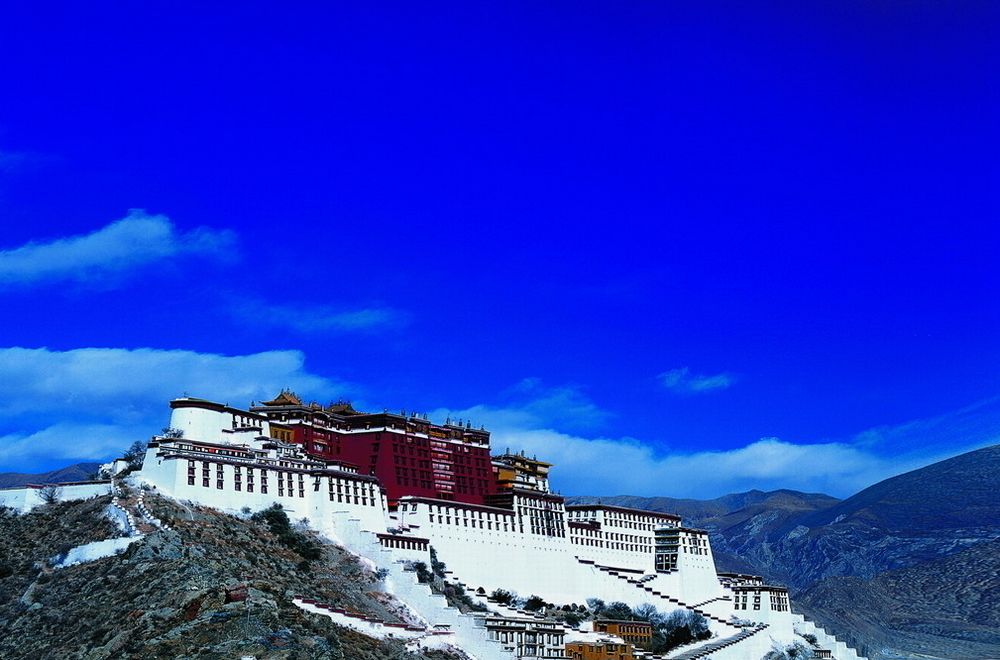
The Potala Palace, the symbol of the town, is a grand palace piled up on a hillside. Made up of the White Palace and the Red Palace, its 13-story main building reaches a height of 117 meters. Inside are places of worship, the reliquary stupas of successive generations and murals, and a reservation is required to visit. Down in the town at its foot, the Jokhang Temple, the center of Tibetan Buddhism, bustles with pilgrims, and the Barkhor that surrounds the temple is both a pilgrimage route and a walking street lined with shops selling crafts and Buddhist articles.
The Potala Palace, the Jokhang Temple and Norbulingka, west of the town, are included in the World Heritage site of the Historic Ensemble of the Potala Palace, Lhasa. At Sera Monastery in the northern outskirts you can watch the monks debating with gestures. Tibetan food rooted in daily life, and the thangkas and crafts laid out in the markets, are pleasures particular to this town.
Many of the town's temples and streets are gathered within walking distance. To let your body adjust to the plateau, taking it easy for a while after arrival is the premise of any trip here. Besides flying, you can reach the town on the Qinghai-Tibet Railway that runs from Xining. Savor Lhasa slowly, surrounded by mountains and prayer.
Photos of Lhasa
Lhasa Essential information
Best time to visit
From summer into autumn daytime temperatures turn mild and the oxygen in the air is comparatively richer, making it an easier time for your body to adjust. Nights still turn cold, though, so prepare for the chill. Winters are severely cold, but the air is clear and with few visitors you can enjoy a quiet town. Whatever the season, preparing for altitude sickness is essential.
Weather and climate
A dry climate typical of high altitudes, marked by thin air and very strong ultraviolet rays. Summer days are comfortable, with rain becoming more likely from the afternoon. Winters turn severely cold, but humidity is low and clear days are many. Because the temperature swings widely within a day, clothes you can adjust by layering suit the place.
Local food
Tibetan cooking suited to life on the plateau is the center of the table. Tsampa, roasted naked barley flour kneaded with butter tea, is indispensable as a source of energy for traveling. Butter tea, made with yak butter and salt, warms the body, and momo, dumplings filled with meat or vegetables, is a flavor that suits Japanese palates as well. Dishes of yak meat and noodle dishes can be enjoyed too.
Getting there and around
The usual ways in are by air or on the Qinghai-Tibet Railway. Flights to Lhasa Gonggar Airport leave from Chengdu, Xi'an and elsewhere, and buses and other services connect it to the town. The Qinghai-Tibet Railway is a long journey from Xining to Lhasa, and the plateau scenery from the window is part of the trip. Getting around town is mainly on foot and by car, and many of the main temples are gathered within walking distance.
Travel tips
For a while after arriving, aim to rest: avoid strenuous exercise and alcohol and drink plenty of water. The Potala Palace is by reservation, and visiting times may be fixed. At the temples, respect worshippers and keep to the manners asked of visitors, such as walking clockwise and following the signs on photography. Do not forget sun protection and clothes you can layer.
Lhasa Monthly climate
Typical monthly temperatures and rainfall based on historical climate records.
Jan
- Avg. high
- 7℃
- Avg. low
- -9℃
- Rainfall
- 0.6mm
Feb
- Avg. high
- 9℃
- Avg. low
- -6℃
- Rainfall
- 1mm
Mar
- Avg. high
- 12℃
- Avg. low
- -2℃
- Rainfall
- 2.5mm
Apr
- Avg. high
- 16℃
- Avg. low
- 1℃
- Rainfall
- 6.9mm
May
- Avg. high
- 20℃
- Avg. low
- 6℃
- Rainfall
- 27.4mm
Jun
- Avg. high
- 23℃
- Avg. low
- 10℃
- Rainfall
- 77.1mm
Jul
- Avg. high
- 22℃
- Avg. low
- 10℃
- Rainfall
- 124.7mm
Aug
- Avg. high
- 21℃
- Avg. low
- 10℃
- Rainfall
- 130.3mm
Sep
- Avg. high
- 20℃
- Avg. low
- 8℃
- Rainfall
- 63.9mm
Oct
- Avg. high
- 17℃
- Avg. low
- 2℃
- Rainfall
- 8.1mm
Nov
- Avg. high
- 12℃
- Avg. low
- -4℃
- Rainfall
- 1.2mm
Dec
- Avg. high
- 8℃
- Avg. low
- -8℃
- Rainfall
- 0.6mm
Historical climate averages for planning only. This is not a weather forecast.