Taiyuan Travel Guide
A Taiyuan guide to Jinci Temple and its Song painted figures, the twin pagodas of Yongzuo Temple, the Shanxi Museum and daoxiaomian noodles.
Taiyuan Travel guide
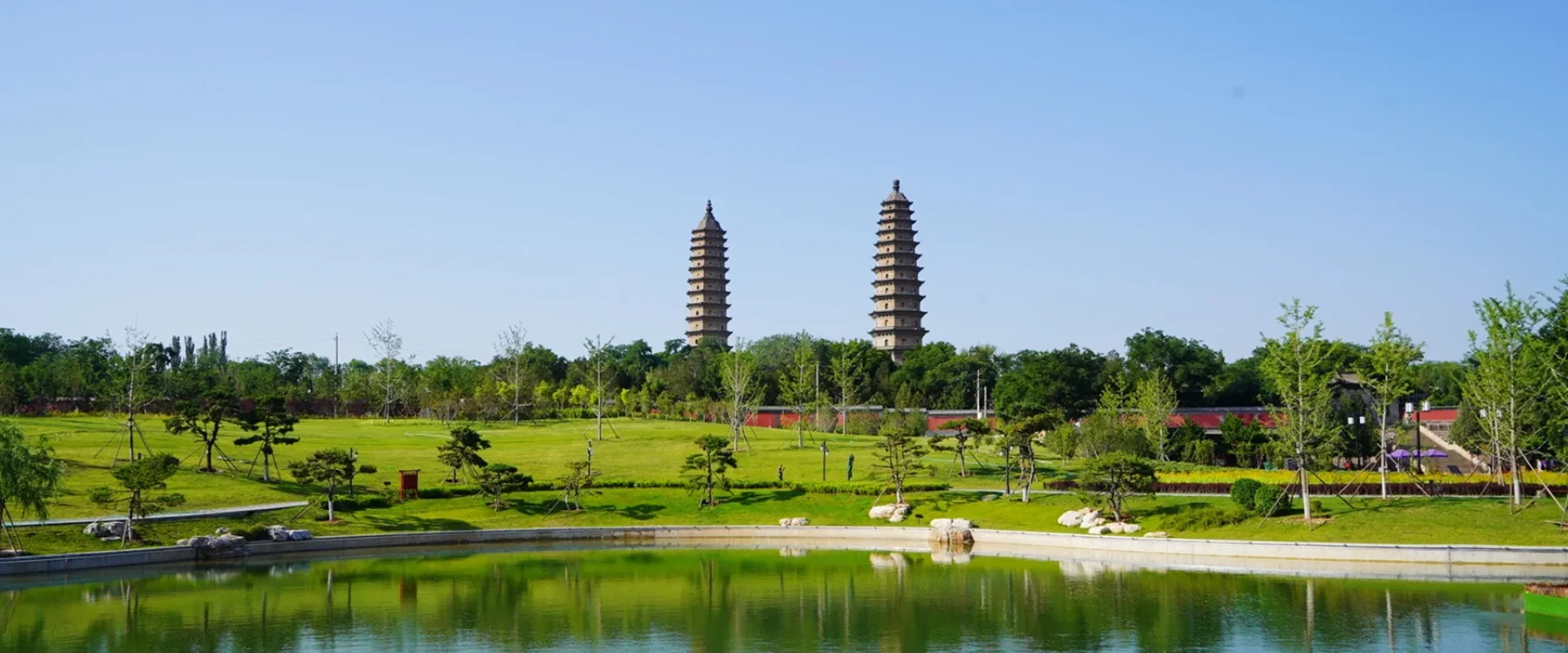
Taiyuan is the capital of Shanxi province, an inland old capital that the Fen River runs through from north to south. It has a long history and flourished in ancient times as a strategic point in the north. A center that keeps traces of its old city walls and new districts spreading along the river overlap within a single city.Jinci Temple is the old sanctuary that represents Taiyuan. It gathers ritual buildings, gardens and sculpture dating from the Northern Wei period, and in the Hall of the Holy Mother, built in the Northern Song, rows of Song-dynasty painted attendant figures stand with differing expressions and costumes. The water of Nanlao Spring still flows without pause, and together with a Zhou-dynasty cypress and a Tang-dynasty pagoda tree it carries a thousand years of time. The Flying Bridge over the Fish Pond is a rare cross-shaped stone bridge, known as the only surviving example of its kind from the same era in China.The two pagodas of Yongzuo Temple, built in the Ming dynasty, have long been loved as the symbol of Taiyuan. The temple is a rare piece of architecture nationwide, assembled entirely from brick. On Tianlong Mountain in the outskirts survive grottoes carved from the Eastern Wei through the Tang, and the Buddhas arranged along the mountain slope carry the sculptural style of the Northern Dynasties and the Sui and Tang down to today. At the Shanxi Museum in the city you can meet masterpieces that tell the history of Shanxi, starting with the bird-shaped zun vessel of the Marquis of Jin from the Western Zhou.Taiyuan's food culture is represented by noodles and vinegar. Dishes are plain and full of strength: daoxiaomian, noodles shaved into boiling water, laochencu vinegar aged for several years, and guoyourou, pork stir-fried with the aroma of vinegar. Linked to Beijing and Xi'an by high-speed rail, it is a city that makes a base for touring Jinci Temple and the old temples at leisure.
Photos of Taiyuan
Taiyuan Essential information
Best time to visit
Spring and autumn are mild and suited to enjoying visits to old temples and grottoes at leisure. Summers are hot, and winters are dry with harsh cold. The scenery changes with each season, from the peonies of Jinci Temple to the autumn leaves on the mountains in the outskirts, which is a pleasure in itself.
Weather and climate
An inland climate marked by wide swings between cold and heat. Summers are hot, winters dry and severely cold, and in spring strong winds can send sand flying. Autumn brings long clear spells and comfortable temperatures. Because the temperature range between seasons is large, clothes you can adjust by layering are a comfort.
Local food
Shanxi cuisine built on noodles and vinegar is the center of the table. The range of noodles is rich, from daoxiaomian shaved into boiling water to tijian cut into slender strips, and their chewy texture is the hallmark. Guoyourou, pork stir-fried with the aroma of vinegar, and Pingyao beef, salted and then simmered, are standards too, with fragrant laochencu vinegar bringing the dishes together.
Getting there and around
The air gateway is Taiyuan Wusu International Airport. From Taiyuan South station, high-speed trains run toward Beijing and Xi'an. Getting around the city is mainly by subway and local bus, which reach Jinci Temple, the Shanxi Museum and other sights. For the Tianlong Mountain grottoes in the outskirts, going by car or bus is the usual choice.
Travel tips
Jinci Temple and the Shanxi Museum have a great deal to see, so allowing extra time is a good idea. The Tianlong Mountain grottoes lie among the hills, so visiting in comfortable walking shoes is recommended. The museum has closing days, so check that it is open before you go.
Taiyuan Monthly climate
Typical monthly temperatures and rainfall based on historical climate records.
Jan
- Avg. high
- 1℃
- Avg. low
- -12℃
- Rainfall
- 3.1mm
Feb
- Avg. high
- 5℃
- Avg. low
- -8℃
- Rainfall
- 5.4mm
Mar
- Avg. high
- 12℃
- Avg. low
- -2℃
- Rainfall
- 11.7mm
Apr
- Avg. high
- 20℃
- Avg. low
- 5℃
- Rainfall
- 21.8mm
May
- Avg. high
- 25℃
- Avg. low
- 11℃
- Rainfall
- 33.9mm
Jun
- Avg. high
- 29℃
- Avg. low
- 15℃
- Rainfall
- 55.2mm
Jul
- Avg. high
- 30℃
- Avg. low
- 18℃
- Rainfall
- 106.1mm
Aug
- Avg. high
- 28℃
- Avg. low
- 17℃
- Rainfall
- 100.3mm
Sep
- Avg. high
- 24℃
- Avg. low
- 11℃
- Rainfall
- 58.7mm
Oct
- Avg. high
- 18℃
- Avg. low
- 4℃
- Rainfall
- 28.2mm
Nov
- Avg. high
- 9℃
- Avg. low
- -3℃
- Rainfall
- 11.8mm
Dec
- Avg. high
- 3℃
- Avg. low
- -10℃
- Rainfall
- 3.1mm
Historical climate averages for planning only. This is not a weather forecast.